
Tennessee TDOSHS Motorcycle Practice Test 25
- Questions30
- Correct to pass24
- Passing score80%
- Minimum age15 years
-
1. Where should a touring rider keep the rain suit?
Show answer
Answer B: Somewhere it can be reached quickly without unpacking everything
Rain gear only helps if you can get to it before you are soaked, so pack it where a quick roadside stop is enough to reach it.
-
2. What should a rider do before riding an unfamiliar or borrowed motorcycle?
Show answer
Answer B: Locate and try the controls, then ride cautiously until used to the machine
Turn signals, horn, headlight switch, fuel valve and engine cut-off switch sit in different places on different models, and hunting for them in traffic is dangerous.
-
3. You are driving on the through road of a T-intersection and want to turn left into the side road. Oncoming traffic is approaching on the through road. What must you do?
Show answer
Answer C: Yield to the oncoming traffic before you turn
The vehicle waiting in the stem of the T yields to both of you, but you still owe the right of way to oncoming through traffic before turning across it.
-
4. Why is hearing protection recommended even under a full face helmet?
Show answer
Answer D: Long term exposure to wind and road noise can cause permanent hearing damage
Airflow around a helmet produces high noise levels, and good hearing protection lowers that noise while still letting the rider hear horns and sirens.
-
5. Traffic is backed up just past the exit you want to use at a single-lane roundabout. What should you do?
Show answer
Answer D: Wait at the yield line until you can pass through and exit
You must not enter a roundabout unless you can clear it, because stopping inside blocks every other entry.
-
6. A driver holds a steady highway speed into the section this sign warns about. What is the most likely result?
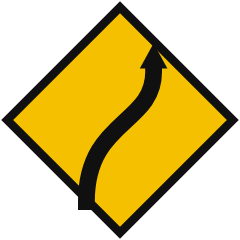
Show answer
Answer B: The vehicle runs wide toward the outside and can cross into another lane or leave the pavement
Holding speed into a change of alignment asks the tires for more side grip than they can supply, so the vehicle runs wide and the driver is left with less room to correct.
-
7. The gates at a railroad crossing begin to come down as you approach. What must you do?
Show answer
Answer A: Stop and wait until the gates are fully raised and the lights stop flashing
Once the gates start down you must stop clear of the tracks and wait until they are fully raised and the warning lights have stopped.
-
8. You want to move into the right lane just as an entrance ramp joins the highway at that point. What is the better choice?
Show answer
Answer B: Wait until you are past the merge area so you do not squeeze the entering traffic
The merge area is where ramp traffic has to find a gap, so adding a lane change of your own into the same space creates a conflict.
-
9. A driver sees this sign on a quiet road with no other traffic in either direction. What is the correct response?
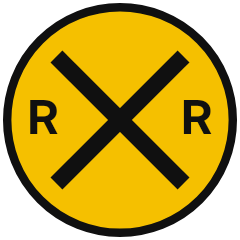
Show answer
Answer C: Slow down, look and listen for a train, and be ready to stop
The sign gives advance notice of a highway-rail grade crossing, so the driver reduces speed, checks both directions along the tracks and keeps enough room to stop short of the rails.
-
10. Which ability does alcohol usually affect first?
Show answer
Answer A: Judgment and self control
Alcohol reduces judgment and inhibition before a drinker notices any clumsiness, which is why an impaired driver often feels perfectly capable while already driving worse.
-
11. Where should a rider with a disabled motorcycle try to stop?
Show answer
Answer D: Well clear of the traffic lanes, off the shoulder where there is room
Getting completely away from moving traffic protects the stopped rider and anyone helping, and a shoulder alone is not a safe place to work on a machine.
-
12. A rider chooses an open face helmet. What does that choice make necessary?
Show answer
Answer A: Separate goggles or a face shield, because the face is uncovered
An open face helmet gives no eye or face protection, so the rider must add goggles or a face shield that will not shatter and that seals against the wind.
-
13. Before making a U-turn on a narrow street, what should the rider do first?
Show answer
Answer A: Check that the street is wide enough and clear in both directions
A U-turn commits the rider to crossing both directions of traffic in a space the machine may not fit into, so both the width and the traffic are judged before starting.
-
14. You are about to pass a large truck on a two-lane highway. Which practice is correct?
Show answer
Answer A: Finish the pass without delay and expect wind turbulence beside the truck
Lingering beside a truck keeps you in its blind spot and exposes you to air turbulence. Pass on the left, keep moving, and move back only when you can see the whole truck in your mirror.
-
15. What is the correct body position for riding over a bump or an obstacle?
Show answer
Answer B: Rise slightly off the seat with your weight on the footrests, absorbing the shock with knees and elbows
Coming slightly off the seat lets your legs and arms work as extra suspension instead of transferring the impact through your body and the handlebars.
-
16. Your group is turning left across oncoming traffic. What should you do?
Show answer
Answer D: Wait until you personally have a large enough gap to turn
Each rider needs a gap of their own, and turning on the strength of the rider ahead means turning into traffic you have not actually judged.
-
17. A strong wind is blowing across an open stretch of road. Besides the gusts, what else should you watch for?
Show answer
Answer A: Branches, dust and loose objects blown into your path
High wind strips branches, litter and dust onto the roadway and can push other vehicles out of their lane, so scan much further ahead than usual.
-
18. A black on white regulatory sign at an intersection reads NO TURNS. What may a driver do there?
Show answer
Answer B: Only continue straight through the intersection
The NO TURNS sign bans turns in every direction at that intersection, so the only lawful movement from that approach is straight through.
-
19. In a work zone the temporary lane lines conflict with the old lines still visible on the pavement. Which do you follow?
Show answer
Answer C: The temporary markings, which show the current traffic pattern
Temporary markings define the traffic pattern in force, and the old lines are simply the layout that no longer applies.
-
20. When is a driver or rider most likely to need hand and arm signals instead of the vehicle turn signal lamps?
Show answer
Answer D: When the lamps have failed or cannot be seen because of glare or a load
Hand and arm signals replace or reinforce the lamps whenever the lamps do not work or cannot be seen clearly by other road users.
-
21. A friend asks for a ride and has no gear at all. What is the correct approach?
Show answer
Answer A: Provide a certified helmet, eye protection and covering clothing
A passenger hits the ground the same way the rider does, so a passenger needs the same protection: a certified helmet, eye protection, gloves, boots and covering clothing.
-
22. A large group has been divided into smaller groups. What should be done between them?
Show answer
Answer A: Leave a gap big enough for other vehicles to move in and pass safely
A gap between sub groups lets other traffic pass or merge without cutting into a formation, which keeps drivers from making sudden moves around the riders.
-
23. A flashing red lamp is mounted above a stop sign at a rural intersection. What does it add?
Show answer
Answer C: Emphasis, while the required stop stays the same
A stop beacon makes an easily missed stop sign more visible, but it neither adds to nor takes away from the obligation the sign already imposes.
-
24. What should be done with a group that has grown too large to manage?
Show answer
Answer D: Split it into smaller groups, each with its own leader and sweep rider
Smaller sub groups stay together more easily and are easier for other drivers to pass, and each one needs its own leader and sweep rider.
-
25. You realize you have just gone past your exit on a freeway. What should you do?
Show answer
Answer C: Carry on to the next exit and turn around there
A missed exit costs a few minutes, while backing up or cutting across the striped gore area puts you in the path of traffic that is not expecting it.
-
26. How should a passenger swing their leg when getting off the motorcycle?
Show answer
Answer D: High and clear of the exhaust and the rear of the machine
A leg dragged low across the back of the motorcycle can catch the seat or the luggage and will find the hot exhaust, so it is lifted well clear.
-
27. A school bus ahead of you has its red lights flashing and its stop arm extended. What are you required to do?
Show answer
Answer A: Stop and stay stopped until the lights stop flashing and the bus starts moving
Flashing red lights and an extended stop arm mean children are getting on or off, so traffic must stop and wait until the bus withdraws the signals and moves again.
-
28. A wide crosswalk you are turning across has a refuge island in the middle. What should you assume about people standing on it?
Show answer
Answer D: They may step off the island into your path at any moment
An island is a pause in a crossing, not the end of one, so treat anyone on it as a pedestrian who is still crossing.
-
29. You are about to pull out from a stop sign. Which scanning habit is correct?
Show answer
Answer A: Look to the left, then to the right, then to the left again before moving
Traffic from the left reaches you first, and a second look left catches anything that arrived while you were looking right.
-
30. You have entered a work zone where crews are working close to the open lane. What should you do?
Show answer
Answer A: Slow down and be ready for workers and machines
Workers and equipment cross the open lane without warning in a work zone, so reduced speed and attention on the road ahead are what keep them safe.